1917: An exquisitely filmed true story and why it was a box-office success.
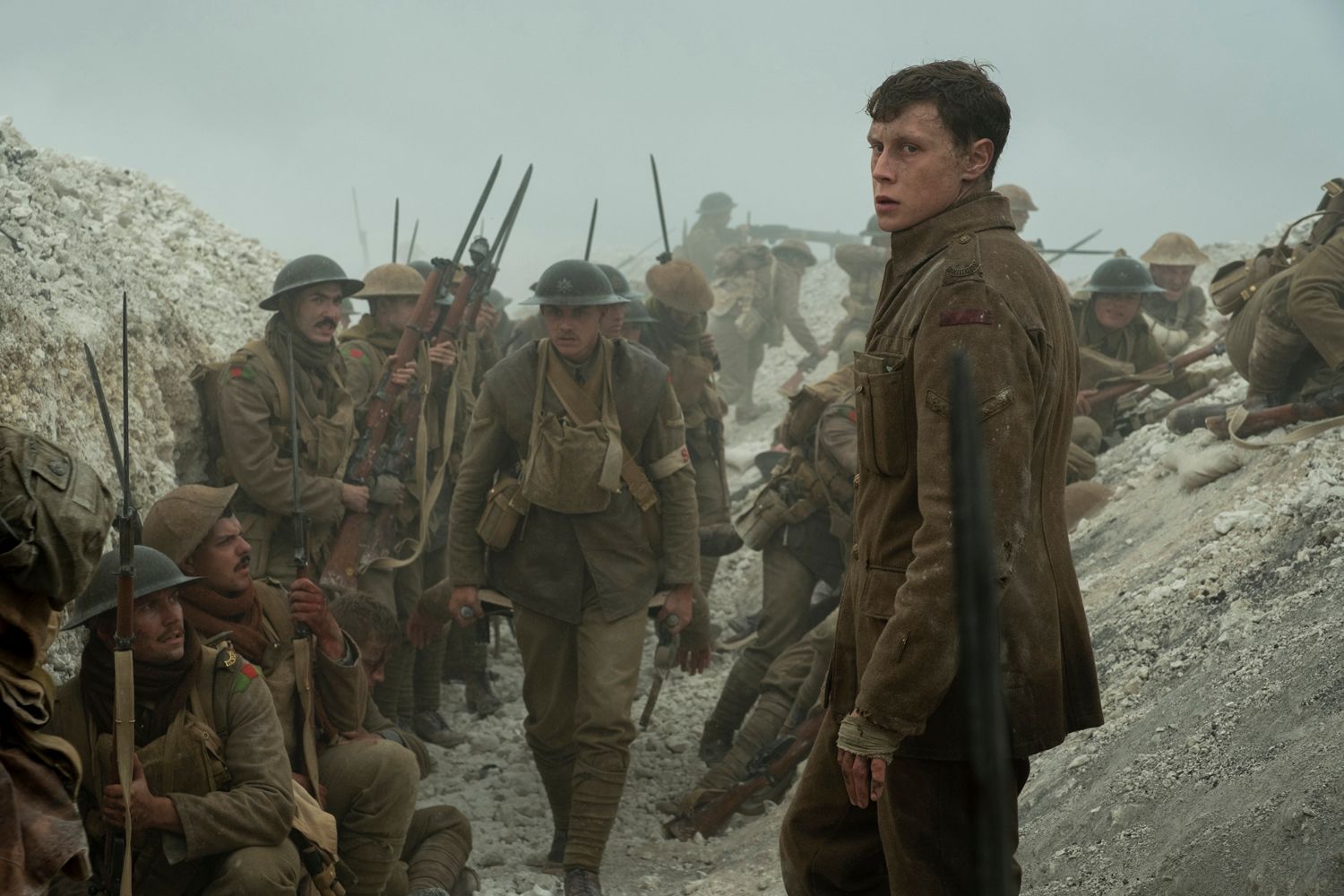 |
| Many could say that 1917 was the movie of the year. What made 1917 so successful, even when WWI movies generally do horribly? Pictured above: Lance Corporal Schofield, searching for General Mackenzie to call of a doomed attack. |
Based on the true story of his grandfather in WWI, Sam Mendes’ film 1917 follows two young British soldiers that are tasked with delivering an urgent message, crossing no-man’s land to call off a doomed attack by the second battalion of Devonshire. A supposed war film but more a dramatic thriller, 1917 provided us with a unique, seemingly one-take cinematic experience and an accurate and tragic depiction of the front lines in WWI, keeping me and other movie watchers on the edge of our seats, tense with anticipation.
In past years, WWI films haven’t garnered much attention or support; films like Flyboys score low on the box-office due to generic plots, information inaccuracies, and bad CGI.
So, what made 1917 different from all these other WWI films, and how did it help them succeed?
In my opinion, the main part of 1917’s success, and the part that I enjoyed most, was the fluid cinematography. Sam Mendes wanted to create a sense of drama building up. There aren’t any large cuts, any places where hours or days pass by, creating a sense of real time. Because of this technique, I felt like I was part of the scene, rather than watching from an outsider’s perspective. I could feel each second passing slowly during the tense moments; my brain would try and predict what would happen next, and most times, what ensued would always throw me for a loop.
 |
| Sam Mendes, the director of 1917, wanted a movie with fluid cinematography. He made 1917 look like it was shot in one take, with barely any cuts or black outs. His grandfather, Alfred Mendes, experienced similar events. During WWI, he was sent on an almost suicidal mission to cross no-man's land and deliver an urgent message. |
It wasn’t just the amazing film technique, though. Everything physical, ranging from props to landscape, was meticulously planned and remarkably accurate. Shot in the countryside of England and Scotland, 1917 was based on a real German plan called Operation Alberich and included real towns like Écoust-Saint-Mein. The authentic look of no-man’s land and the abandoned farmhouse amazed me. Overall, the movie transitioned smoothly and the props were convincing; but, was the plot interesting?
In short, yes, the plot was interesting. But what made it even better, what made me think wow, was the fact that 1917 was based off of a true story. Sam Mendes wrote the script after hearing his grandfather talk about his life during the war, specifically a certain dangerous mission that he received.
Although the plot wasn’t the strongest part of the film, it was more than sufficient for me. During the bunker cave-in, my eyes were glued to the screen; when Schofield woke up and ran through a town battered with artillery, my heart sped up and I flinched whenever a shadow moved.
When watching, I was surprised by my feeling that there was something lurking behind, outside of the camera. That’s why I believe that 1917 isn’t a war film as much as a dramatic thriller. Mendes elected to film singular German troops; rather than ever showing a whole army hiding in the trenches, Schofield and Blake only confronted drunk deserters and crash-landing pilots. Without knowing and seeing the real enemy, I never knew who, or what, could be coming.
To me, though, that was the real fun of watching this movie. Being caught off guard when the bunker collapsed, overthinking when there was nobody in sight, underthinking when I thought he had made it. Adam Graham from Detroit News called it “a tense, unnerving ride that accomplishes its goal of translating the first-person experience of war better than any war movies that have come before it.”
A combination of these strengths; beautiful visuals, a compelling, true story, and great film technique, boosted 1917 to a five-day gross of $1 million. Critics and reviewers seemed to have liked it too, as it boasted a certified fresh 89% rotten tomato and won three Academy Awards (for visual effects, sound mixing, and cinematography), two Golden Globes (best motion picture- drama and best director), along with an assortment of other nominations and awards.
 |
| For his work in 1917, Sam Mendes won the Golden Globe for Best Director. He brought a unique film style to the movie, and it truly showed off in the box-office and awards. |
I believe that, as camera and editing technology advances, we will start to see more and more war movies like 1917. Instead of a whole battlefield panorama, films will focus our attention onto the miniscule, almost insignificant journey of a few soldiers that are just a couple small specks in a sea. But, if they produce enough emotion and provide a good backstory like Sam Mendes did, then they will succeed, too.


Comments
Post a Comment